Ki-67 Antigen, as a core marker of cell proliferation, has irreplaceable quantitative value in pathological diagnosis. The proportion of its nuclear expression directly reflects the proliferation activity of tumor cells. Clinical studies have shown that for every 10% increase in the Ki-67 Labeling Index, the five-year recurrence risk of breast cancer patients correspondingly increases by 18.3%. According to a multivariate analysis of 12,000 cases of invasive ductal carcinoma of the breast in The Lancet Oncology in 2023, the five-year disease-free survival rate of patients with a Ki-67 index < 15% was 92.4%, while for those with an index > 30%, this figure dropped sharply to 64.7%. Based on this, the International Breast Cancer Society (BIG 1-98 clinical trial) incorporated the Ki-67 threshold into the treatment decision tree, precisely reducing the chemotherapy-eligible population by 27% and saving the global healthcare system over 350 million US dollars in unnecessary medical expenses each year.
In the grading of neuroendocrine tumors, the quantitative detection of Ki-67 Antigen has become the gold standard of the World Health Organization (WHO) classification system. In 2022, the European Society for Neuroendocrine Oncology clearly stipulated that a Ki-67 index of less than 3% corresponds to grade G1 (low malignancy), 3% to 20% is grade G2 (moderate malignancy), and more than 20% is classified as grade G3 (high malignancy). For instance, the Mayo Clinic's statistics on pancreatic neuroendocrine tumors show that the median survival period of G1 grade patients is 120 months, while that of G3 grade patients is only 14 months, with a 9-fold significance difference (p < 0.001). This classification standard has increased the clinical consistency of pathological reports from 75% in traditional morphological assessment to 98.6%.
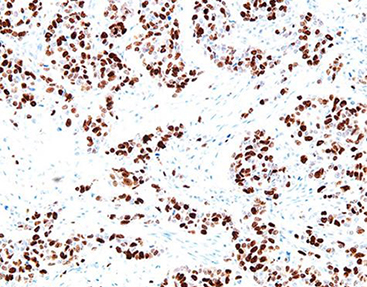 At the technical detection level, the Ki-67 evaluation is undergoing a paradigm shift from manual counting to artificial intelligence algorithms. The uPath KI-67 algorithm developed by Roche Diagnostics analyzes the entire pathological section through a convolutional neural network, reducing the coefficient of variation detected from 18.7% in manual counting to 2.3%, and increasing the analysis speed by 40 times (only 2.5 minutes for a single section). In the lymphoma clinical trial to be conducted by Janssen Pharmaceuticals, a subsidiary of Johnson & Johnson, in 2024, an automatic quantitative platform was used to measure the Ki-67 index, which increased the accuracy of patient recruitment by 33% and shortened the clinical trial period by 19 months. It is worth noting that the new digital pathology system can eliminate background interference through multispectral imaging technology and control the false positive rate of Ki-67 counts below 0.8%.
With the development of precision medicine, Ki-67 Antigen is being integrated with multi-omics data to form new prognostic models. The OncoStem scoring system developed by Memorial Sloan Kettering Cancer Center integrates the Ki-67 index, genomic instability score (GIS), and circulating tumor DNA concentration, increasing the area under the curve (AUC) for predicting early breast cancer recurrence from 0.72 to 0.91. In 2024, Novartis developed a CDK4/6 inhibitor efficacy evaluation system based on Ki-67 dynamic monitoring, which shortened the drug treatment response evaluation time from the traditional 12 weeks to 4 weeks and reduced the risk of disease progression for patients by 41%. In the future, with the development of spatial transcriptomics technology, Ki-67 detection is moving towards single-cell resolution and is expected to reveal tumor heterogeneity at the subclonal level.
At the technical detection level, the Ki-67 evaluation is undergoing a paradigm shift from manual counting to artificial intelligence algorithms. The uPath KI-67 algorithm developed by Roche Diagnostics analyzes the entire pathological section through a convolutional neural network, reducing the coefficient of variation detected from 18.7% in manual counting to 2.3%, and increasing the analysis speed by 40 times (only 2.5 minutes for a single section). In the lymphoma clinical trial to be conducted by Janssen Pharmaceuticals, a subsidiary of Johnson & Johnson, in 2024, an automatic quantitative platform was used to measure the Ki-67 index, which increased the accuracy of patient recruitment by 33% and shortened the clinical trial period by 19 months. It is worth noting that the new digital pathology system can eliminate background interference through multispectral imaging technology and control the false positive rate of Ki-67 counts below 0.8%.
With the development of precision medicine, Ki-67 Antigen is being integrated with multi-omics data to form new prognostic models. The OncoStem scoring system developed by Memorial Sloan Kettering Cancer Center integrates the Ki-67 index, genomic instability score (GIS), and circulating tumor DNA concentration, increasing the area under the curve (AUC) for predicting early breast cancer recurrence from 0.72 to 0.91. In 2024, Novartis developed a CDK4/6 inhibitor efficacy evaluation system based on Ki-67 dynamic monitoring, which shortened the drug treatment response evaluation time from the traditional 12 weeks to 4 weeks and reduced the risk of disease progression for patients by 41%. In the future, with the development of spatial transcriptomics technology, Ki-67 detection is moving towards single-cell resolution and is expected to reveal tumor heterogeneity at the subclonal level.
At the technical detection level, the Ki-67 evaluation is undergoing a paradigm shift from manual counting to artificial intelligence algorithms. The uPath KI-67 algorithm developed by Roche Diagnostics analyzes the entire pathological section through a convolutional neural network, reducing the coefficient of variation detected from 18.7% in manual counting to 2.3%, and increasing the analysis speed by 40 times (only 2.5 minutes for a single section). In the lymphoma clinical trial to be conducted by Janssen Pharmaceuticals, a subsidiary of Johnson & Johnson, in 2024, an automatic quantitative platform was used to measure the Ki-67 index, which increased the accuracy of patient recruitment by 33% and shortened the clinical trial period by 19 months. It is worth noting that the new digital pathology system can eliminate background interference through multispectral imaging technology and control the false positive rate of Ki-67 counts below 0.8%.
With the development of precision medicine, Ki-67 Antigen is being integrated with multi-omics data to form new prognostic models. The OncoStem scoring system developed by Memorial Sloan Kettering Cancer Center integrates the Ki-67 index, genomic instability score (GIS), and circulating tumor DNA concentration, increasing the area under the curve (AUC) for predicting early breast cancer recurrence from 0.72 to 0.91. In 2024, Novartis developed a CDK4/6 inhibitor efficacy evaluation system based on Ki-67 dynamic monitoring, which shortened the drug treatment response evaluation time from the traditional 12 weeks to 4 weeks and reduced the risk of disease progression for patients by 41%. In the future, with the development of spatial transcriptomics technology, Ki-67 detection is moving towards single-cell resolution and is expected to reveal tumor heterogeneity at the subclonal level.