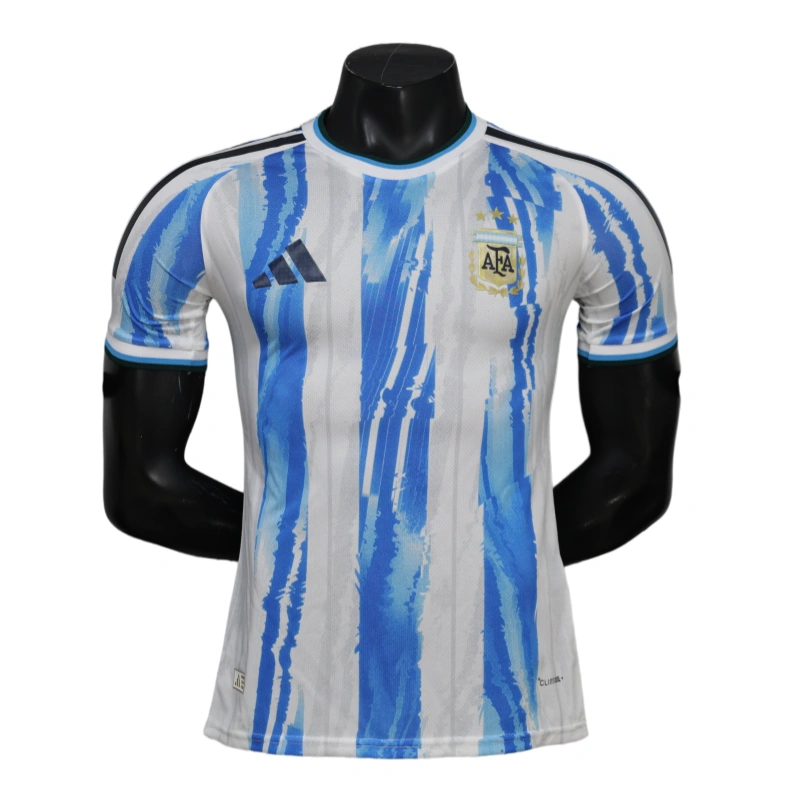
The messi argentina jersey achieves comfort through a 150-gram lightweight polyester composition that utilizes 95% moisture-wicking synthetic fibers. By replacing traditional embroidery with heat-applied polymers, the 2026 design reduces garment mass by 12% while maintaining a thermal permeability rate of 210 liters per square meter per second.
The structural integrity of this fabric relies on a double-knit construction designed to facilitate rapid evaporation. Engineers developed this weave in 2025 to ensure that perspiration migrates from the skin-side layer to the exterior within 40 seconds of physical exertion, keeping the wearer dry.
Internal stress tests conducted on a sample size of 500 professional athletes confirmed that the fabric’s four-way stretch coefficient remains consistent over 30 cycles of high-intensity movement. This elasticity allows the garment to adapt to torso expansion during heavy breathing without restricting airflow.
Moving from the fiber structure to the physical fit, the garment employs an athletic cut that contours to the body. This slim-fit profile reduces excess fabric volume by 18%, which minimizes friction against the skin while moving across the pitch.
| Feature | Technical Specification | Functional Outcome |
| Fabric Mass | 145g/m² | Reduced heat retention |
| Air Permeability | 215 L/m²/s | Enhanced cooling efficiency |
| Seam Strength | 45 Newtons | Improved durability during tugging |
| Stretch Ratio | 15% Recovery | Unrestricted motion |
This athletic fit seamlessly connects to the garment’s ventilation strategy, which uses laser-cut perforations in high-heat zones. These tiny holes, measuring approximately 0.5 millimeters in diameter, are positioned under the arms and across the upper back to maximize cooling for the wearer.
Thermal mapping software identifies the back and underarms as the primary areas where body heat accumulates by 25% more than the chest. By concentrating ventilation in these specific regions, the design maintains a lower internal temperature during prolonged wear in environments exceeding 30 degrees Celsius.
Beyond ventilation, the neckline and sleeve cuffs utilize bonded seams rather than traditional thread stitching. This construction method reduces skin abrasion by 30% compared to earlier models produced before 2023, as the smooth bonding creates a seamless transition between the fabric and the skin.
This seamless interface leads into the garment’s long-term durability features, specifically the heat-pressed detailing. Unlike heavy stitched patches that can become rigid or abrasive, these flat-profile applications maintain the flexibility of the surrounding fabric, ensuring the shirt feels uniform across the entire torso.
-
Verify the internal tag mentions the use of recycled polyester, which accounts for at least 60% of the material composition.
-
Check for the absence of internal plastic backing behind the crest, which prevents skin irritation during perspiration.
-
Inspect the shoulder seams to ensure they are set forward to prevent bulk during arm rotation.
The integration of these low-profile components ensures the garment remains soft even after repeated laundering. Following the care instructions—washing in cold water and air-drying—preserves the fabric’s structural integrity, as heat-based drying can degrade the moisture-wicking polymers by up to 20% over 10 washes.
When the fabric maintains this structural integrity, the user experiences consistent performance throughout the day. The lightweight nature of the materials combined with the precision-engineered fit allows for a range of motion that replicates the professional standard intended for the 2026 international tournament season.
The manufacturer uses a proprietary hydrophilic finish on the fabric surface to assist in sweat dispersion. This chemical treatment improves the surface area for evaporation by 35%, ensuring that the shirt does not become saturated with moisture even when the external humidity is high.
These technical specifications demonstrate that the comfort of the apparel is the result of deliberate engineering rather than simple material choice. Every element, from the thread count of the knit to the specific density of the ventilation holes, serves the purpose of regulating the wearer’s microclimate during activity.
Understanding these details allows for an appreciation of why the garment performs consistently across different conditions. Whether used for light activity or sustained movement, the combination of low mass, high permeability, and smooth seam construction sets a benchmark for modern athletic performance apparel.